STATION 1 (Eye)
1. What is inside A? - Posterior segment >>> Vitreous humor.
2. Identify B - Superior oblique.
3. Name the nerve that innervates B - Superior oblique >>> CN IV/trochlear.
STATION 2 (Arm)
1. Action of A – Extension of forearm.
2. Identify B – Brachioradialis.
3. Name 2 of the 4 muscles that make up the rotator cuff – Any two of: Supraspinatus, Infraspinatus, Subscapularis, Teres minor.
STATION 3 (Brain)
1. What is the origin of A (CN I)? - Forebrain
2. What kind of function (sensory - S, motor - M or both - B) does B (CN XI) have? - Motor
3. What is the parasympathetic function of C (CN X)? - Innervates glands and smooth muscles of the gut, heart, lungs and pharynx
STATION 4 (Brain)
1. Identify A – Superior sagittal sinus.
2. What passes through here (at B) – Olfactory nerves.
3. Identify C – 4th ventricle.
STATION 5 (Leg)
1. Identify A – Tensor fasciae latae.
2. What is the origin of B – Ischial tuberosity/Ischium.
3. What is the function of C (both) – Eversion + Plantar flexion.
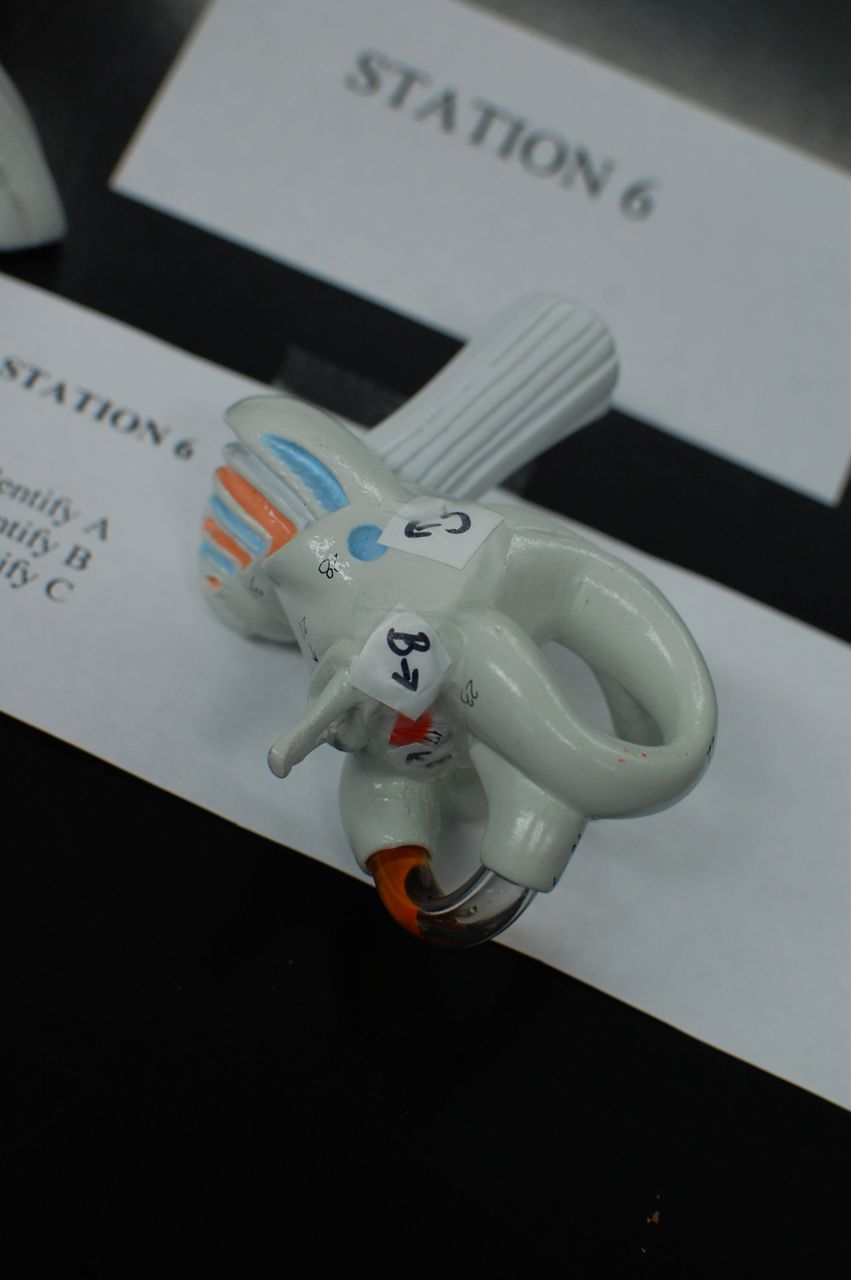
STATION 6 (Ear)
1. Identify A - Semicircular duct.
2. Identify B - Stapedius muscle.
3. Identify C - Round window.
STATION 7 (Nervous System)
1. Identify A – Cerebral aqueduct.
2. Identify B (specific) – Pons.
3. Identify C – Quadratus lumborum.
STATION 8 (Head Muscles)
1. Identify A – Orbicularis oris.
2. Identify A – Frontal belly of epicranius/Epicranius frontalis.
3. What is the function of C – Closing jaw/chewing.
STATION 9 (Plexuses)
1. Identify A - Sciatic nerve.
2. Identify B - Radial nerve.
3. Which nerve innervates C? - Diaphragm >>> Phrenic nerve.
STATION 10 (Joints)
1. Identify A – Patellar ligament.
2. Identify B – (Medial) meniscus.
3. Identify C (no abbreviation!) – Anterior Cruciate Ligament.
STATION 11 (Muscles)
1. Identify A – Pectoralis minor.
2. Identify B – Internal oblique.
3. Identify C – Transverse abdominus.
STATION 12 (Eye)
1. Identify A - Fovea centralis.
2. Identify B? - Ciliary body.
3. Which nerve innervates C? - Orbicularis oculi >>> Facial.
STATION 13 (Brain)
1. Identify A – Corpora quadrigemina (Superior and Inferior Colliculi)
2. What is “A” responsible for? – Coordiantes head movement with vision and sound.
3. Identify C – Sigmoid sinus.
STATION 14 (Arm)
1. Identify A – Coracobrachialis.
2. Action of B – Flexion of the forearm.
3. Identify C – Supraspinatus.
STATION 15 (Nose + Tongue)
1. Identify A - Olfactory eptithelium.
2. Which nerve is responsible for the perception of taste in the posterior third of the tongue? - CN IX/glossopharynheal.
3. Which nerve controls the muscles of the tongue? - CN XII/hypoglossal.
STATION 16 (Spinal Cord)
1. Identify A – Ventral rootlets.
2. Is “A” motor, sensory, or both? – Motor.
3. Identify C (the opening) – Gray commissure/Central canal.
STATION 17 (Muscles)
1. What bone is the insertion of A? – Humerus.
2. What bone does B move? – Scapula.
3. Name 2 antagonists in head movement (flexion-extension) – Sternocleidomastoid and Splenius.
STATION 18 (Head + Eye)
1. Which nerve controls A – the parotid salivary gland? - CN IX/glossopharyngeal, parasympathetic division.
2. Identify B - Lacrimal gland.
3. Which nerve controls B? - Lacrimal gland >>> CN VII/facial, parasympathetic division.
STATION 19 (Leg Muscles)
1. Identify A – Pectineus.
2. Action of B – Flexion of thigh/trunk.
3. Insertion of C – Calcaneus.
STATION 20 (Joints)
1. Name the functional classification of this joint (A) – Amphiarthroses.
2. What action is permitted at C? – Gliding (plane joint).
3. Name the structural classification of this joint (B) – Synovial.
STATION 21 (Brain)
1. Identify A – Cerebral peduncles.
2. Identify B – Corpus callosum.
3. What type of tracts are “B”? – Commissural.
STATION 22 (Spinal Cord)
1. Identify A – Sympathetic ganglion/trunk.
2. Identify B – Dorsal root ganglion.
3. Identify C (the layer) – Pia mater.
STATION 23 (Muscles)
1. Identify A – Gracialis.
2. Identify B – Soleus.
3. Action of C – Flexion of femur and extension of knee (one answer is enough).
STATION 24 (Ear)
1. Identify A - Cochlear/Vestibulocochlear nerve.
2. Identify B - Organ of Corti.
3. What is inside C? - Perilymph.
STATION 25 (Muscles)
1. What muscle originates at A? – Deltoid.
2. What muscle originates at B? – Biceps brachii (short head.)
3. What muscle cover C? – Subscapularis.
STATION 1
STATION 2
STATION 3
STATION 4
STATION 5
STATION 6
STATION 7
STATION 8
STATION 9
STATION 10
STATION 11
STATION 12
STATION 13
STATION 14
STATION 15
STATION 16
STATION 17
STATION 18
STATION 19
STATION 20
STATION 21
STATION 22
STATION 23
STATION 24
STATION 25